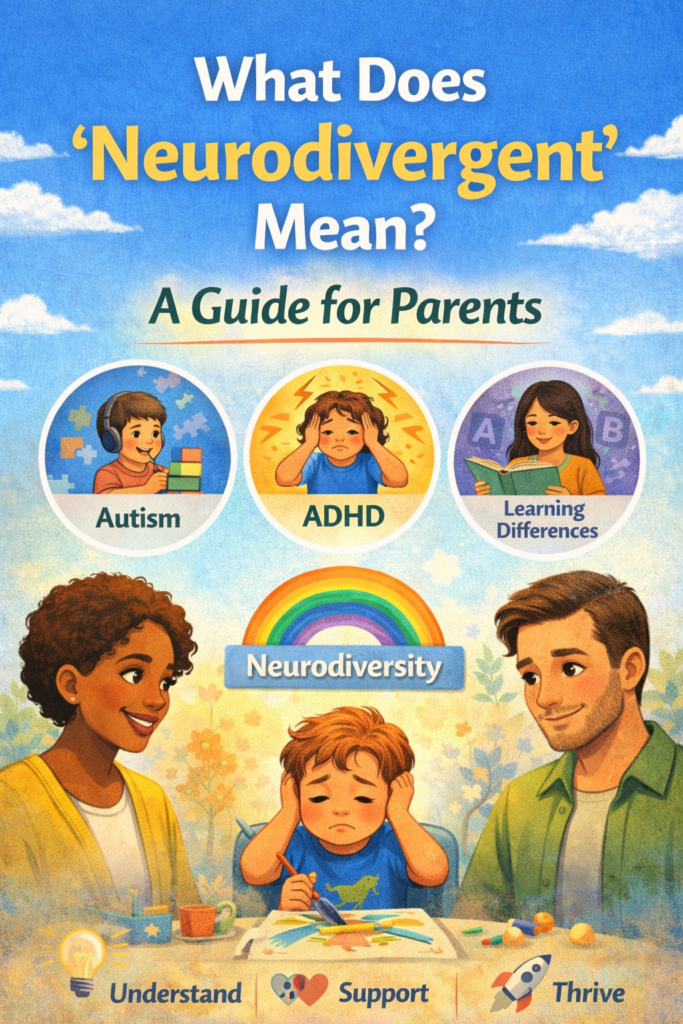
As parents, we want to understand our children and support them in the best way possible. In recent years, you may have heard the term “neurodivergent.” It’s a word that is becoming more common in conversations about learning, development, and mental health. But what does it really mean?
This guide explains the concept of neurodivergence and how understanding it can help parents support their children in a positive and empowering way.
Understanding Neurodiversity
The idea of neurodiversity recognizes that every brain works differently. Just as people have different personalities, talents, and ways of learning, they also have different ways of thinking and processing information.
When someone is described as neurodivergent, it simply means their brain functions differently from what society typically considers “neurotypical” or typical development.
Neurodivergence is not something that needs to be “fixed.” Instead, it reflects the natural diversity of how human brains work.
Examples of Neurodivergent Conditions
Many types of developmental and cognitive differences fall under the neurodivergent umbrella. Some of the most common include:
- Autism Spectrum Disorder (ASD) – differences in communication, social interaction, and sensory processing.
- Attention-Deficit/Hyperactivity Disorder (ADHD) – challenges with attention, focus, impulse control, and organization.
- Dyslexia – differences in reading and language processing.
- Dyspraxia – challenges with motor coordination and movement.
- Sensory Processing Differences – heightened or reduced sensitivity to sounds, textures, lights, or other sensory input.
Every child is unique, and no two neurodivergent children are exactly alike.
Strengths of Neurodivergent Children
Neurodivergence often comes with many strengths. Children who think differently frequently bring creativity, curiosity, and new perspectives to the world.
Some common strengths include:
- Strong creativity and imagination
- Deep focus on areas of interest
- Unique problem-solving abilities
- Honest and direct communication
- Strong attention to detail
Recognizing and nurturing these strengths is an important part of helping children grow and succeed.
Common Challenges
While neurodivergent children have many strengths, they may also experience challenges in environments that are designed primarily for neurotypical learners.
Some challenges may include:
- Difficulty with social communication
- Sensory sensitivities (noise, textures, lights)
- Challenges with organization or executive functioning
- Difficulty with transitions or unexpected changes
With the right support and understanding, many of these challenges can be reduced or managed.
How Parents Can Support Neurodivergent Children
Supporting a neurodivergent child starts with understanding and acceptance. Here are some helpful approaches for parents:
1. Focus on Strengths
Celebrate what your child does well and encourage their interests.
2. Create Predictable Routines
Consistent routines can help children feel safe and reduce anxiety.
3. Provide Sensory Support
Quiet spaces, sensory tools, and flexible environments can help children regulate their emotions.
4. Encourage Creative Expression
Art, music, crafts, and movement can help children communicate and build confidence.
5. Build a Support Network
Working with teachers, therapists, and supportive community programs can make a big difference.
Embracing Neurodiversity
Understanding neurodivergence helps shift the conversation from “What’s wrong?” to “How can we support this child’s unique way of thinking?”
When children feel accepted and supported, they are more likely to develop confidence, resilience, and a strong sense of identity.
Supporting Neurodivergent Children in Our Community
At Creative Cottage Industries, we believe every child deserves a space where they feel safe, understood, and inspired. Through creative activities, social skill development, and supportive programs, we help neurodivergent children explore their strengths and build confidence in a welcoming environment.
Every child has something special to offer—and when we embrace neurodiversity, we create a world where all children can thrive.
List the 10 high-traffic blog topics specifically optimized for Google searches like “autism services Indio” or “neurodivergent programs Coachella Valley.
Here are 10 high-traffic blog topics optimized for Google searches related to autism services in Indio and neurodivergent programs in the Coachella Valley. These topics incorporate keywords parents commonly search, such as autism therapy, ABA therapy, autism diagnosis, sensory activities, and local autism resources.
Many families searching online are looking for local therapy providers, support groups, and guidance after diagnosis, which are common needs across the Coachella Valley autism community.
10 SEO-Optimized Blog Topics
1. Autism Services in Indio, CA: A Parent’s Guide to Local Support
Keyword targets:
autism services Indio CA, autism therapy Indio, autism resources Coachella Valley
2. Neurodivergent Programs in the Coachella Valley: What Options Exist for Families?
Keyword targets:
neurodivergent programs Coachella Valley, autism programs desert cities
3. ABA Therapy in Indio: What Parents Should Know Before Getting Started
Keyword targets:
ABA therapy Indio CA, autism therapy near me, behavioral therapy autism
ABA therapy is widely used to improve social, learning, and communication skills in children with autism.
4. 10 Sensory-Friendly Activities for Neurodivergent Children in the Coachella Valley
Keyword targets:
sensory activities autism, sensory friendly activities Coachella Valley
5. Signs of Autism in Children: When Should Parents Seek an Evaluation?
Keyword targets:
early signs of autism, autism diagnosis California
6. How Social Skills Programs Help Children with Autism Build Friendships
Keyword targets:
social skills groups autism, autism social programs
Many autism organizations offer structured activities such as LEGO clubs, music therapy, and social groups that help children practice communication and interaction.
7. How to Create a Sensory-Friendly Home for Neurodivergent Children
Keyword targets:
sensory room ideas autism, sensory friendly home
8. Resources for Parents of Children with Autism in the Coachella Valley
Keyword targets:
autism support groups Coachella Valley, autism parent support
Local organizations provide education, advocacy, and support programs for families navigating autism services.
9. Creative Activities That Help Neurodivergent Children Build Confidence
Keyword targets:
creative therapy autism, art activities neurodivergent kids
10. How to Navigate School Support for Neurodivergent Children (IEPs & 504 Plans)
Keyword targets:
IEP autism California, school support autism
Parents often seek guidance on navigating school services and accessing resources for children with autism and developmental differences.
✅ Pro Tip:
For best Google results, each blog post should include:
- “Indio” or “Coachella Valley” in the title
- local keywords in headings
- FAQs at the bottom
- internal links to services pages
These local keywords help the website rank for searches like:
- autism services Indio CA
- autism therapy near me
- neurodivergent programs Coachella Valley
If you’d like, I can also create 10 even more powerful SEO titles specifically designed to rank on Google for autism services in the Coachella Valley, which could significantly increase website traffic.