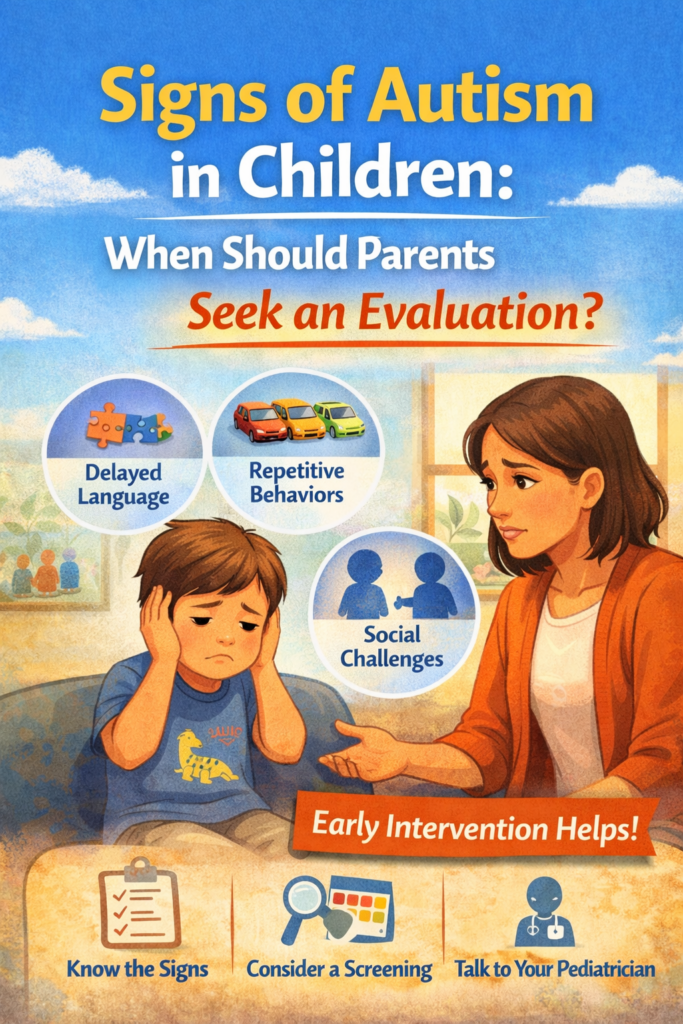
Every child develops at their own pace, but sometimes parents notice behaviors that seem different from typical developmental milestones. Autism Spectrum Disorder (ASD) is a developmental condition that affects how a child communicates, interacts with others, and experiences the world. Recognizing the early signs can help families access support and resources sooner.
Common Signs of Autism in Young Children
While every child with autism is unique, some common early signs may include:
1. Delayed Speech or Language Development
Some children may speak later than expected, use fewer words, or have difficulty expressing their needs and feelings.
2. Limited Eye Contact
Children with autism may avoid eye contact or have difficulty engaging in back-and-forth interactions with others.
3. Difficulty with Social Interaction
A child may prefer playing alone, have trouble understanding social cues, or struggle to form friendships.
4. Repetitive Behaviors
Some children repeat certain movements or actions, such as hand-flapping, rocking, or repeating the same phrases.
5. Strong Reactions to Sensory Experiences
Children may be very sensitive—or not sensitive enough—to sounds, lights, textures, or other sensory input.
When Should Parents Seek an Evaluation?
If you notice several of these signs or feel concerned about your child’s development, it can be helpful to talk with your pediatrician or a developmental specialist. Early evaluations can help identify whether a child may benefit from additional support.
Early intervention programs and supportive services can help children develop important communication, learning, and social skills.
Supporting Your Child
Remember that autism is part of the natural diversity of how people think and experience the world. With understanding, patience, and the right support, neurodivergent children can build confidence, develop new skills, and thrive in their communities.
If you have concerns about your child’s development, seeking guidance early can open the door to valuable resources and opportunities for growth.